Professor Heather Hartwell will be delivering a workshop on April 27th 2017 that will help participants gain insight into how it is possible to build resilience in the area of Research and Knowledge Exchange.
This session will explore how it may be possible to build resilience in the area of research and knowledge exchange, where rejection for funding and from publishers is common. The speaker will offer their views of how resilience can be built and how to overcome obstacles. There will be the opportunity for discussion around the topic.
For those interested in booking onto the course, please follow the link here.
If you would like further information about the workshop, please contact Ehren Milner (emilner@bournemouth.ac.uk)
Prisoners eat better than hospital patients in Britain. Our research found that prisoners consume around three times more calories than patients and their diet is more in line with government nutritional recommendations.
Eating more isn’t always healthier, but when you consider that malnutrition is a big problem in hospitals, it can be. We found that the average male hospital patient consumes just 1,184 calories a day – even though the NHS recommends 2,500. Male prisoners, however, consume an average of 3,042 calories. The situation is similar for women. Female patients consume on average 1,134 calories (the recommended amount is 1,940). But female prisoners consume 3,007 calories, on average.
The patients’ food intake was measured three days before they were discharged from hospital, so we can be fairly sure that they weren’t consuming less due to ill health. And they weren’t consuming less because they were served fewer calories. All menus could provide for dietary recommendations, but it simply wasn’t eaten.
Hospitals face a number of difficulties in providing high-quality food. Dishes are prepared on a tight budget. They are cooked at a central hospital kitchen and often have to travel a considerable distance to the wards. But prison food is also prepared on a tight budget and often has to travel considerable distances from the kitchen to the prison wing.
Four years of data gathering
During our four-year study, we visited four prisons for men and two for women. In each, we carefully noted how food was prepared, delivered to the prison wing and served to the prisoners. We analysed the menu and interviewed prisoners and catering staff. We conducted four hospital studies with a similar method of data collection, which helped us to assess and compare the dietary intakes of hospital patients and prisoners. Through this we were able to identify the main differences in catering.
In hospitals, kitchen staff prepare the meals and hand them to porters who complete the delivery when they have time, between doing other tasks. Once the food reaches the ward, the responsibility for serving the food is handed to nurses. The various teams have to cooperate to ensure that food is delivered while it’s still fresh. However, providing food is not the main priority of a hospital. We noted tension between catering staff, who cared about food quality, and medical staff, who didn’t consider it a priority.
We found that the food prepared by hospital and prison kitchens – although not fine dining – has a similar nutritional quality and is presented in a similar manner. (Typical fare might include meat and two veg, a pudding or yogurt, and a piece of fruit.) In prison, food was transported quickly and food quality was maintained up to the point of service to the prisoners. The food arrived hot, comparatively fresh and could be consumed immediately without distractions. By contrast, hospital food was delayed between kitchen and patient.
A fragmented process
In the hospitals that we studied, getting food from the kitchen to the patient was a fragmented and badly coordinated process. Meals were often delayed and disrupted by medical ward rounds, tests and treatments.
The result of these delays? Food was left for too long in warming trolleys prior to being served. Hot food cools down and cold food warms up to the temperature of the ward. Food dries out and discolours. Meat curls and gravy congeals. Compared with prisons, the temperature, texture and appearance of food were all worse in hospitals by the time the food was served. Nutrients may also have diminished and the food became less palatable. Differences that are likely to account, at least in part, for the marked difference in intake between prisoners and patients.
But this is not inevitable. Delays could be reduced. Hospitals could adopt a more coordinated approach and have a dedicated team responsible for the preparation, delivery to the ward and service to the patient. The team responsible for catering would not have the conflicting priorities that clinical teams have. Although a few hospitals do have a dedicated catering team that delivers food directly to the patient, this is the exception, not the rule.
In many hospitals, nutrition is often an afterthought. Priority is given to medical tests and treatments and often ignores the role that food plays in improving the patient’s health. One governor told us that if meals were delayed or missed in prison there would be a riot.
– See more at: http://blogs.bournemouth.ac.uk/research/2017/04/09/what-hospital-catering-could-learn-from-the-prison-system-bu-published-in-the-conversation/?utm_source=digest&utm_medium=email&utm_campaign=daily#sthash.QKugEDf5.dpuf
Enjoy learning about different cultures, or keen to share your own culture with others?
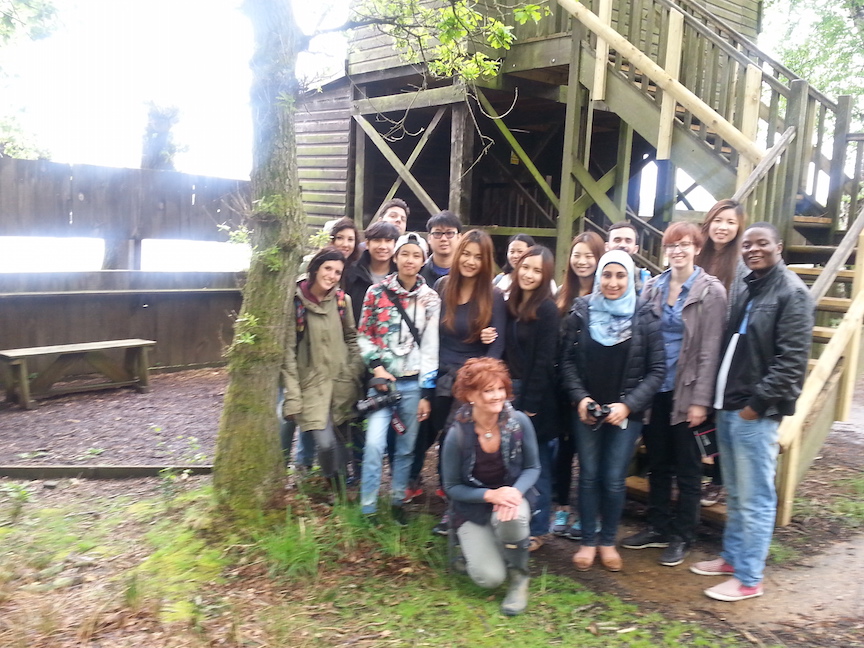
Being part of our Global BUddies programme will give you the opportunity to do all of that, and more. Our Global BUddies programme matches new students with current students, in small groups made up of different nationalities. As a group leader, you’ll play an important part in helping our new students from the UK and overseas to settle in to life at BU, using your own experience of studying at BU to help them adjust to life at BU.
What will I be doing?
As a group leader in the programme, you will contact your assigned group before the start of term and keep in touch via email and social media until they arrive. The students in your group would be different nationalities to you and your role would be to organise activities and, importantly, encourage your group to be curious about each other’s cultures. You’ll be paired with at least one other Group Leader (a current BU student, like you) and your group will be about 15 students in total.
There will be a big social event for everyone on the programme during the week our new students arrive, followed by a series of varied events throughout the term. You’ll be expected to organise regular meetings for your group. Training workshops will be provided, where you’ll get involved in activities designed to get you talking about cultural differences.
How will I benefit from this experience?
This opportunity is open to all current students from all cultures and backgrounds, including the UK, meaning you’ll being develop a network of new friends from all over the world.
When you become a Global BUddy, we hope you will improve your understanding of cultural differences and learn how to communicate effectively with people from diverse cultural backgrounds.
This experience will build up your transferable skills, such as cultural awareness, cross-cultural communication, leadership, event planning and more – which all goes towards enhancing your employability and CV.
Registrations close at midnight on Sunday 14 May and we will contact you within seven days. If successful, you will be invited to a training session in late May/early June.
Get more information, FAQs, and register on our webpage.
It is fairly obvious that the number of tourists that visit and explore our towns have a significant impact on the economy. Places where tourists can be seen left, right and centre are bound to have a higher rate of employment of people in the tourism and hospitality industries. Understanding the tourism economy is essential in managing and maintaining sustainable visitor influx and destination appeal.
The developing world of tourism means that original models and practices need constantly to be refined. Models of tourism demand were one of the first to be developed in order to recognise what factors influence the drive of visitors in and out of certain destinations, and more recently, research has expanded into areas such as tourism competitiveness, the effects of touristic policies and taxes, as well as the econometric relationship between tourism and economic growth.
Bournemouth’s International Conference on The Visitor Economy: Strategies and Innovations taking place September 4-6th 2017 will contain presentations focused on the developments and key issues in relation to this topic. Subjects covered will include but are not limited to:
Tourism competitiveness
Economic models of tourism demand
Tourism policy and taxation
Tourism and poverty alleviation
In a buzzing world where tourism is becoming more accessible and apparent, understanding the economics of tourism is an important issue that will ensure tourism will continue to strive and develop, without damaging the economy of the destination in question. Make sure you don’t miss out on this incredible opportunity and book your tickets now.
Last date for early bird registration: 14 July 2017
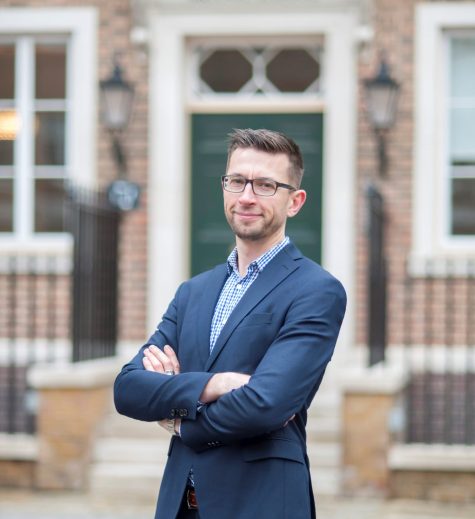
Graduate Maris Kuklis is MICE & Groups Account Manager at Etihad Airways
He says “I studied BA (Hons) Tourism Management. Graduated in 2008. I’m working now for Etihad Airways. My degree helped to set the stage for the start of the career in business tourism. It was very relevant as offered a great choice and relevant subjects studied, to mix of people we met and made lifetime friends with some of which we are working in my day to day job. Without this course, I would not be where I am today.
Previous jobs included Senior Manager – UK & Europe Dubai Business Events c/o Hills Balfour Creative Producer and Editor, Travel and Tourism Research Association, Senior Marketing Executive, MICE Hong Kong Tourism Board, Product and Commercial Executive Cosmos Holidays.
A combination of group work, presentation and variety of subjects from finance, to accounting to small business management. As well as fantastic lecturers, the field trip to Cyprus in year 2 and wealth resources available through at the University from books to online reports. My BU experience was live changing, and motivating for my career and life in general. I was also involved in BU Athletics Club and setting up the Student Entrepreneurship Club called Business Mania.
I would advice recent graduates looking for work to:
Talk to family and friends if they know of any job openings through friends – ask for recommendations.
Join key industry Associations where potential employers may attend – have a business card ready.
Gain as much work experience as possible through various paid and charity work.
Update your CV and Linkedin Profile with most recent information – ask someone to proofread the profile. Have a professional looking headshot profile picture.
The internet of things, big data, wearable technology and augmented reality are just a handful of the technological innovations driving change in our business and personal lives. To stay competitive, the tourism industry needs to understand, respond and harness these opportunities. Research from BU into Smart Tourism destinations can help organisations to take advantage of new developments and strengthen both their strategies and competitiveness.
Smart systems take advantage of interconnectivity and interoperability of integrated technologies to reengineer processes and data in order to produce innovative services, products and procedures towards maximising value for all stakeholders. Smartness reengineers economies and industries, and shapes products, actions, processes and services in real-time. Agility engages different stakeholders simultaneously to optimise the collective performance and competitiveness and generate benefits for all involved in the value system. To achieve that, smart systems use innovative robust technology, the Internet of everything, cloud computing, big data, advanced data analytics, and a robust and ever expanding communications infrastructure.
Based on Smart Cities research and methodologies, a Smart Tourism Destination successfully implements smartness and agility to ensure that everybody is interconnected and processes are integrated towards value generation, through dynamic co-creation, sustainable resources and dynamic personalisation and adaptation to context. All suppliers and intermediaries, the public sector, as well as consumers and various interested parties are networked, dynamically co-producing value for everybody interconnected in the ecosystem.
Awarded & submitted bids, Fusion, Fusion Investment Fund, student research
The following is a list of current awarded projects, complete with live job links, for the summer round of the Student Research Assistantship (SRA) scheme:
Dr Anya Chapman – Climate Change and Seaside Piers: Student Research Assistant
Dr Lorraine Brown – Female Muslim tourists in the West
Dr Neelu Seetaram – An investigation of the types of tourism taxes imposed at destinations worldwide
Simon Thomas – An investigation of the placement year on student’s career expectations
Dr Viachaslau Filimonau – Food donations in the UK grocery retail sector – The role of local charities
Dr Viachaslau Filimonau – Tourism and (food) waste – a systematic literature review of an emerging research domain
Please promote these vacancies to students where applicable. All jobs are live on MyCareerHub, our Careers & Employability online careers tool. You will need to use your staff/student credentials to login.
Please do look out for SRA updates on the BU Research Blog.
If you have any questions about this scheme, please contact Rachel Clarke, KE Adviser (KTP and Student Projects) on 61347 or email sra@bournemouth.ac.uk
– See more at: http://blogs.bournemouth.ac.uk/research/2017/04/06/student-research-assistant-awarded-projects/?utm_source=digest&utm_medium=email&utm_campaign=daily#sthash.86FgnTUN.dpuf
Dr Sean Beer presentation at the Catering and Retail Show
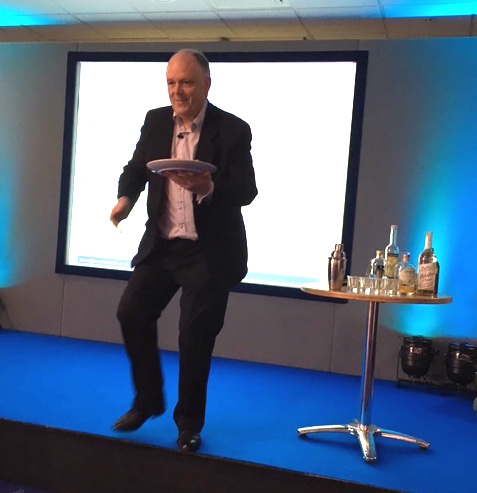
There are some that think that Dr Sean Beer is as good looking as Tome Cruise in the 1988 film Cocktail, and possibly these pictures dispel all doubt (probably not).
Here Sean is pictured engaging in the practical part of his presentation, Food and culture: Heritage and Tradition at the recent Catering and Retail Show. This featured his reworking of the classic cream tea to produce a Dorset cream tea involving, Saffron Scones, Dorset Blueberry Jam, Vanilla Clotted Cream and Dorset Tea or Coffee. This was followed by a Dorset cream tea for 2050 featuring Dorset Blue Vinney Scones, Crème Fraîche, Dorset Naga Chilli Jam and Dorset Long Tea.
For those not in the know, Dorset Long Tea is Mixologist Dr Beer’s version of Long Island Iced Tea a special mix of……… Black Cow Vodka, Conker Gin, Dorset Apple Schnapps, Elderflower Pressé, Cointreau, Dorset Honey Stock Syrup, and lots of ice. All this was underpinned by the philosophy of Husserl and Heidegger.
Yes to philosophy. Yes to the Dorset cream teas. Yes to Dorset Iced Tea. But we think a no to Sean as Tom Cruise.
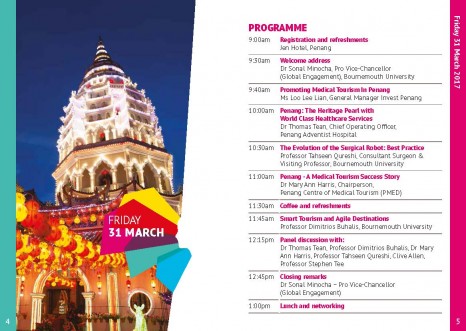
The Global Festival of Learning is our way of celebrating learning and knowledge. Although this is only the second Global Festival of Learning it is already attracting much attention and this year we focus on some of the more pressing issues that are being faced globally.We have arranged a fantastic programme of keynotes, plenary sessions and cultural activities, covering topics ranging from tourism & business, marketing, science and journalism, social interactions, and leadership and innovative learning. We look forward to engaging and sharing thoughts with colleagues and people during the Festival and experiencing the fantastic programme of social and cultural activities arranged for us by our wonderful hosts. The Global Festival of Learning is more than just an event – it is how BU works closely with our valued partners to co-create impact with communities and regions across the globe. We are confident that you will meet like-minded people, create new ideas, share common professional ground, inspire others and celebrate the joy of learning so that the Festival is both stimulating and rewarding. The programme takes place this year in Indonesia – one of the largest economies in Southeast Asia (Jakarta, 27th & 28th March), and Penang, Malaysia – the Silicon Valley of the East and a UNESCO World Heritage site (30th and 31st March).
The overarching theme of this year’s ASEAN Festival is Sustainability and Development and it opens in Jakarta with academic, government and industry speakers from Business, Media, Communication, Tourism and Hospitality. The Keynote speaker is Bournemouth University alumni Professor Ir. Wiendu Nuryanti, MArch, PhD Universitas Gadjah Mada (UGM), Yogyakarta Vice-Minister of Education and Culture for Cultural Affairs, Ministry of Education, Government of Indonesia (2011-2014). The Festival also features an opportunity for Indonesian students to learn more about BU and attend Master Classes from a range of experts.
MALAYSIA The Festival then proceeds to Penang where issues around Heritage, Health, Tourism and Hospitality will be explored by a range of experts from industry and education. Our Keynote Speaker is Professor Dato’ Dr. Morshidi Sirat the Founding Director of the Commonwealth Tertiary Education Facility (CTEF) based at Universiti Sains Malaysia, Penang. CTEF is a collaborative effort between MoHE and Commonwealth Secretariat (COMSEC) based in London. We have arranged a fantastic programme of keynotes, plenary sessions and cultural activities, covering topics ranging from tourism & business, marketing, science and journalism, social interactions, and leadership and innovative learning. The Festival concludes on the final day with a networking event and roundtable discussion on Investing in Skills & Talent: Spotlight on Tourism and Health.



 Senior Manager – UK & Europe Dubai Business Events c/o Hills Balfour
  Creative Producer and Editor,
  Senior Marketing Executive, MICE
  Product and Commercial Executive Cosmos Holidays.