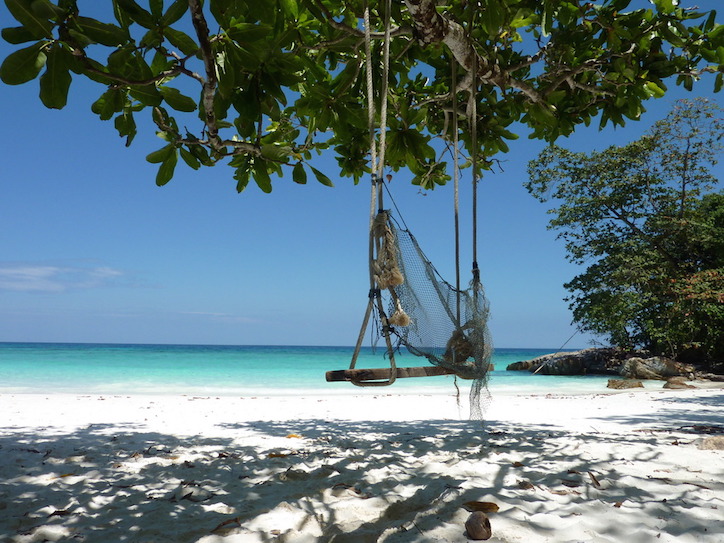
Professor John Fletcher, Pro Vice-Chancellor Research and Innovation, from Bournemouth University, highlighted the risk to fragile ecosystems that large numbers of tourists pose in Koh Tachai Thailand

Koh-Tachai1Professor John Fletcher, Pro Vice-Chancellor Research and Innovation, from Bournemouth University, highlighted the risk to fragile ecosystems that large numbers of tourists pose. He told MailOnline Travel: ‘The events in Koh Tachai reflect the tension between the exotic environment, its attraction to tourists and the impact they have.

‘There has been a similar debate over closing Maya Bay on the island of Phi Phi which gained notoriety after the film The Beach was shot there. Ironically, tourists are attracted to fragile ecosystems because of their beauty but the presence of tourists can destroy the very thing that they came to enjoy.

‘In larger destinations this tension between the tourism industry and the environment can be managed to ensure that they can live in harmony – however, in the case of Koh Tachai the size of the island makes it so vulnerable to negative impacts it is likely to suffer rapidly even with small numbers of tourists.

‘The tourism industry – is just that, it is an industry and it often needs volume to thrive and the tour operators often set out their stalls on the basis of large tourist numbers. Fragile ecosystems cannot be sustained in the face of large tourist numbers and there are many destinations that can testify to this including those as diverse as Mount Everest, The Galapagos Islands, Antarctica, Uluru (Ayres Rock) that have all been put at risk by the volume of tourists.’

Read more: http://www.dailymail.co.uk/travel/travel_news/article-3592704/Will-Thai-paradise-lost-forever-Idyllic-island-ruined-tourists-closed-indefinitely-s-damaged-repair.html#ixzz49gIHKBZ3


Volunteers required to help the Department of Tourism and Hospitality at the Festival of Learning 2016 Bournemouth University 25-29 June 2016

Volunteers required to help the Department of Tourism and Hospitality
at the Festival of Learning 2016 Bournemouth University 25-29 June 2016 

Bournemouth University FestivalofLearning2016

https://microsites.bournemouth.ac.uk/festival-of-learning/ 

Events run by the Department of Tourism and Hospitality 

Saturday 25 June

11:00 – 5:00: FG06, Talbot Campus- Global BU: Bournemouth and Beyond- H. Osman

Tuesday 28th June 
09:00–13:00 KG01 and K101 : eTourism: harnessing technology to increase competitiveness Dimitrios Buhalis https://goo.gl/Zq3lhd
14:00-18:00 KG01 and K101: Accessible tourism: a benefit to everyone Dimitrios Buhalis https://goo.gl/4dYKrM
14:00-15:00 F104 FoodSMART – Eat out smarter! The FoodSMART team Heather Heartwell

18:00-20:00 F101 : The Mad Hatter’s cream tea: food heritage, tradition and authenticity and back to Alice.  Sean Beer 

Wednesday 29 June

18.30-20.00 FG01 : The definitive guide to post modernism. Sean Beer

18:00-20:00 Barnes Lecture Theatre: Should we still switch off our phones on holidays? B. Neuhofer and A. Ladkin

If you can help welcoming our guest, take photographs and video, create social media content to storify the events please contact Professor Dimitrios Buhalis Head of Department Tourism and Hospitality Bournemouth University 

Sport, Tourism and Heritage Minister, David Evenett MP, visits Bournemouth University

Sport, Tourism and Heritage Minister, David Evenett MP, visits Bournemouth University and launches 2016 National Coastal Tourism Academy report at BU’s Executive Business Centre

Bournemouth University Department of Tourism and Hospitality becomes a strategic partner with New Forest Tourism

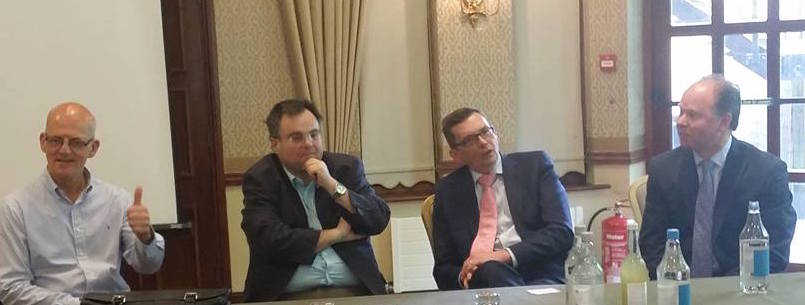
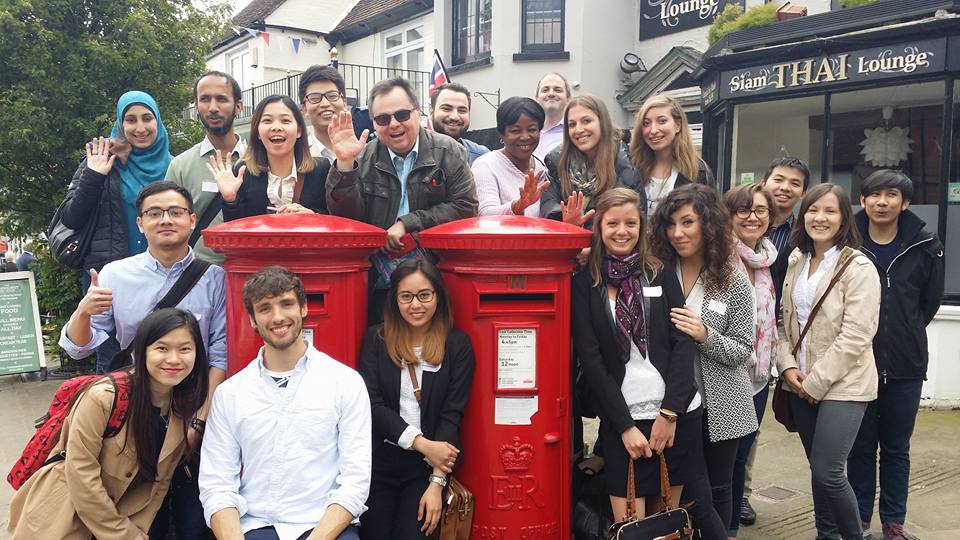
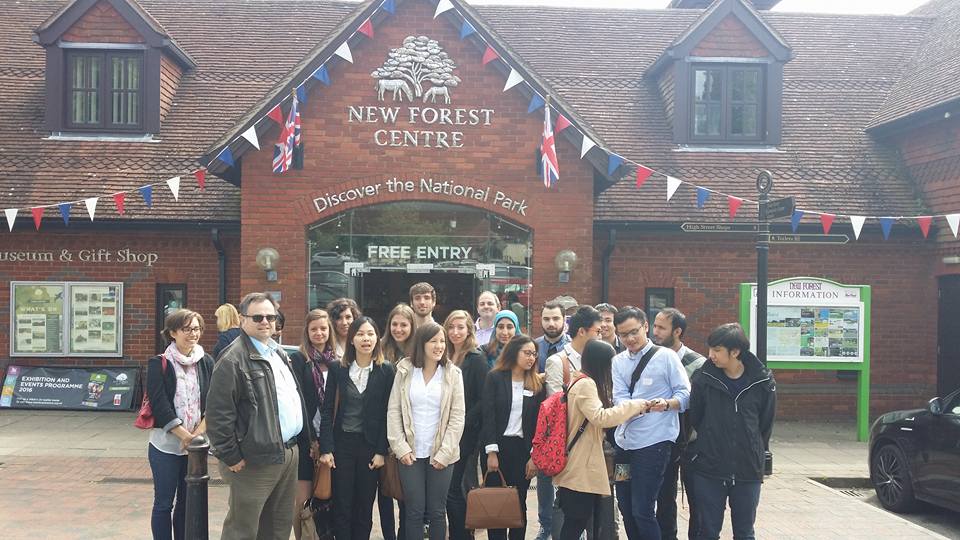
Bournemouth University Department of Tourism and Hospitality becomes a strategic partner with New Forest Tourism. Invited by Anthony Climpson OBE Employment & Tourism Manager New Forest District Council, a delegation of students and staff from Bournemouth University visited the New Forest on the 26th May and had strategic discussions with the hoteliers and tourism businesses.

NEWFORESTMEETINGVISITNEWFOREST

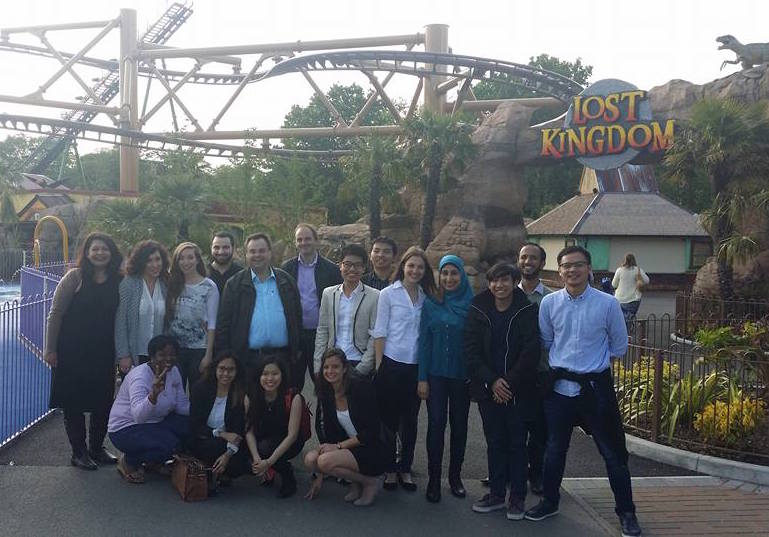
This will result to placements and graduate employment for students, testing and developing theory and assisting tourism and hospitality organisations to develop their strategies and operational management. Hotels such as Rhinefield House Hotel one of the Hand Picked Hotels, Balmer Lawn Hotel,  Careys Manor and SenSpa and Montagu Arms Hotel in addition to well established partners Chewton Glen Hotel & Spa | Luxury Country House Hotel  as well as Attractions such as the Paultons Family Theme Park – Home of Peppa Pig World and Lost Kingdom are some of the businesses in the New Forest that will participate in the strategic partnership. 

TICNewForestTIC

Head of Department of Tourism and Hospitality Professor Dimitrios Buhalis said it is great working strategically with our natural lab co-creating fantastic opportunities for knowledge creation with local and regional partners, our students and the research capacity of Bournemouth University. Not only this activity will enable us to test theory into practice but will also give great opportunities to our students to develop their professional experience, see tourism and hospitality excellence in practice and also contribute to the regional economy and development.

 LOSTKINGDOM

Rio 2016 Olympic Games volunteer opportunities

As Brazil prepares to host the 2016_Summer_Olympics_logo.svg_ in just over two months’ time, now is the final chance for your students, staff, and alumni to take advantage of two exclusive and life changing opportunities available this summerLondon-Rio City Links is working in partnership with a highly rated university in Brazil to offer a unique six week long, Olympic-themed programme of Portuguese language and Brazilian culture in the picturesque city of Juiz de Fora.   We also have exclusive Rio 2016 volunteer opportunities for students, staff and alumni who can speak any of the following languages: 

Arabic
Japanese
Korean
Mandarin
Russian
Portuguese

Additionally, there are a limited number of places for Journalism students and alumni who have industry experience. Thanks to your help, we have so far placed 25 students/graduates from UK universities with roles as official specialist volunteers at the Rio 2016 Olympic Games in August. The organising committee recognises the high calibre of your students and would like to recruit even more students/alumni, who have the desired skills. We would appreciate your help once again in circulating this once-in-a-lifetime offer to the relevant departments and to any students, alumni and staff who may be interested. If you would like to promote this opportunity to your students, staff and/or alumni, please use this leaflet.  Finally, we are always recruiting students/graduates of Portuguese or Spanish courses to teach English in Brazil with our five month paid internships programmeIf you would like to know any more details, please do not hesitate to contact me or my colleagues Julian Vennis on Jvennis@worldcitylinks.net or Rachel Banks on rachel@worldcitylinks.net

Thanks and best wishes, 

Matthew

Matthew Haley
Communications and Marketing Director
World City Links
0207 960 6348
www.LRCL.net
10 Greycoat Place, London, SW1P 1SB

Derek Robbins contributes to the discussion of the true cost of flying

Derek Robbins, a senior lecturer at Bournemouth University, told MailOnline Travel: ‘In mid 2000s the fuel cost on short haul flights was estimated at 20 per cent of total costs based on UK figures. ‘Whilst the price of oil has fallen considerably, it should be noted that many airlines have hedged the cost of their fuel so have not received the full benefit of the falling oil price. ‘ The crew cost of the journey, calculated using average salaries on jobs website Glassdoor, comes to just $1.50 (£1.03) per passenger, including both the pilots and stewards.

Read more: http://www.dailymail.co.uk/travel/travel_news/article-3587017/The-true-cost-flying-revealed-airlines-aren-t-quite-greedy-think-profits-low-10-flights.html#ixzz49gGEMqCm

explaining flight costs

Bournemouth Pier and Rock Reef Field Visit and experience, storification

Thursday 16th June 16:00-21:00 Bournemouth University Department of Tourism and Hospitality
field visit, social media storyfication, video and photo competition and hopefully creating a student music band at Bournemouth Pier and Rock Reef ! 

To celebrate the end of the academic year the Department of Tourism and Hospitality Bournemouth University and our partner RockReek Bournemouth Pier http://www.rockreef.co.uk are inviting students and staff to a  Field Visit and experience at the RockReek Bournemouth Pier http://www.rockreef.co.uk/ and a Social media exercise RockReef WebSite Facebook Twitter Instagram Tripadvisor

Provisional schedule 

16:00 Arrive at the Pier with your FREE ticket and student Identity Card !

16:00-19:00 We will experience the Zip Wire, the Clip n Climb and the highline and share our experience through storification #bournemouthpier #BUTourism, social evening (FREE with your student card)

19:00-21:00 Social event – flexible dining at Key West Restaurant on Bournemouth pier (at participants expense – 30% on normal food and drink prices)

Also:

MUSIC : Bring a guitar or any musical instrument you play and lets create the Departmental music band!

PHOTO Competition: upload photos of the day using #bournemouthpier #BUTourism and win a meal for two
VIDEO Competition: upload videos of the day using #bournemouthpier #BUTourism and win a meal for two

the winners will be announced at 21:00 on the 16th June 2016 at the Bournemouth Pier and vouchers will be issued then.

Current  BU Tourism and Hospitality students Get your FREE ticket on https://www.eventbrite.co.uk/e/bournemouth-pier-and-rock-reef-field-visit-and-experience-storification-bournemouthpier-butourism-tickets-25664984660  Password: #BUTourism  and also bring your BU ID card

RockReef Bournemouth Pier
WHEN  Thursday, 16 June 2016 from 16:00 to 21:00 (BST) Add to Calendar
WHERE Bournemouth Pier – Pier Approach, Bournemouth, BH2 5AA – View Map

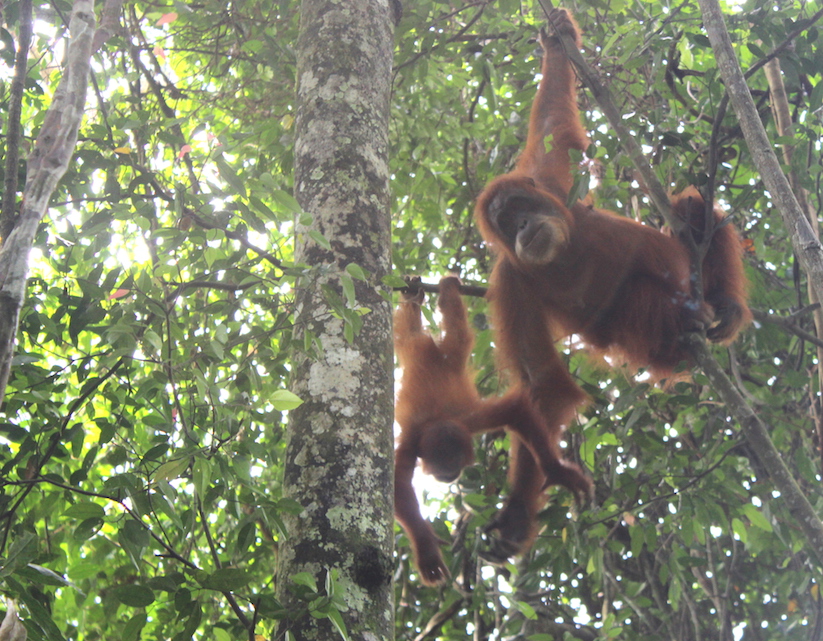
Dr Susanna Curtin joined a research expedition in January 2016 to Sumatra

P1010926As part of a LEAP project, Dr Susanna Curtin  from the Department of Tourism and Hospitality joined a research expedition in January 2016 to Sumatra with Associate Professor Amanda Korstjens and Professor Ross Hill from the Department of Science and Technology. The primary purpose of this expedition is to pave the way for research students to determine habitat requirements for primates and elephants; examining how forest structure influences primate and elephant populations.  However part of the funding for the expedition was also designated to support research into the strengths , opportunities and threats of ecotourism in the  Genung Leuser National Park as tourism may be a way of protecting  this highly biodiverse and important habitat.

Whilst Orangutan tourism can protect areas of forest which otherwise would be cleared for palm oil plantation, Indonesia is currently squandering a huge opportunity to offer a high quality, unique ecotourist experience.  Sumatran rainforests have a wealth of flagship species as well as interesting birds, insects, mammals and reptiles.  There are Asian elephants, Sumatran tigers, rhino and several species of primate including Orangutan (which only occur in Sumatra and Borneo). But as it is, the ecotourism that is offered at Bukit Lawakng and Tangahan is mostly orientated towards mass tourism and focused on single species.

Now a few months later a small team of students are travelling back to Sumatra to interview tourists as to their motivations to visit Sumatra, the types of wildlife tourism they engage in, the knowledge of the wildlife guides they encounter and the overall quality of their ecotourism experiences.  It will be really interesting to collate the findings and to publish the results.

IMG_2426 

Dr Lorraine Brown visited the two Spanish cities of Madrid and Barcelona in order to conduct research on the link between tourism and the Spanish civil war

In Aprilorrainel 2016, using BU Fusion funding, Dr Lorraine Brown visited the two Spanish cities of Madrid and Barcelona in order to conduct research on the link between tourism and the Spanish civil war, with a particular focus on the way that tourism can mobilise and consolidate political identity.

She took part in Spanish Civil War walking tours where she interviewed tourists, and made useful connections with tour guides. She also met with Spanish academics interested in the topic and agreed a research agenda, including the writing of a research bid on tourism in post-conflict destinations.


In July, she will attend a conference with the title: ‘Spain’s Civil War 80 years later: The wound that will not heal’. This will allow me further useful networking opportunities with academics from around the world, including Spain. She is m currently working on writing up my findings into an article that revolves around a topic similar to the conference title: how to commemorate a traumatic historical event whose repercussions are still felt today?