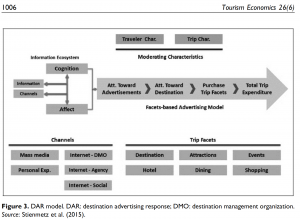
New Publication: de Souza, J., Mendes, LF., Buhalis, D., 2020, Evaluating the effectiveness of tourist promotions to improve the competitiveness of destinations, Tourism Economics, Vol. 26(6), pp, 1001–1020,

Bringing you all the latest news from The Department of Tourism and Hospitality at Bournemouth University

Next time when you dine alone, perhaps on a business trip, remember this new publication.
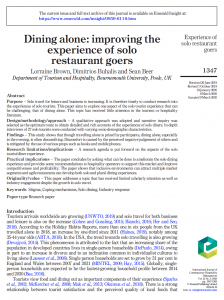
Brown, L., Buhalis, D. and Beer, S. (2020), “Dining alone: improving the experience of solo restaurant goers“, International Journal of Contemporary Hospitality Management, Vol. 32 No. 3, pp. 1347-1365. https://doi.org/10.1108/IJCHM-06-2019-0584
Purpose-Solo travel for leisure and business is increasing. It is therefore timely to conduct research into the experiences of solo tourists. This paper aims to explore one aspect of the solo tourist experience that can be challenging, that of dining alone. This topic has received little attention in the tourism or hospitality literature. Design/methodology/approach-A qualitative approach was adopted and narrative inquiry was selected as the optimum route to obtain detailed and rich accounts of the experiences of solo diners. In-depth interviews of 27 solo tourists were conducted with varying socio-demographic characteristics.
Findings-This study shows that though travelling alone is prized by participants, dining alone, especially in the evening, is often discomfiting. Discomfort is caused by the perceived negative judgement of others and is mitigated by the use of various props such as books and mobile phones. A research agenda is put forward on the aspects of the solo tourist/diner experience.
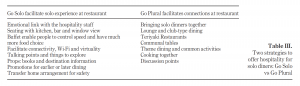
Practical implications-The paper concludes by asking what can be done to ameliorate the solo dining experience and provides some recommendations to hospitality operators to support this market and improve competitiveness and profitability. The paper shows that inclusive environments can attract multiple market segments and agile restaurants can develop both solo and plural dining experiences.
Originality/value-This paper addresses a topic that has received limited scholarly attention as well as industry engagement despite the growth in solo travel.
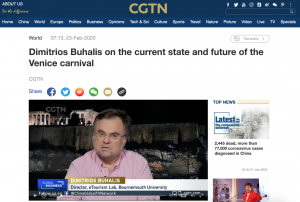
Interview Professor Dimitrios Buhalis to the Global Business programme of China Global TV Network about the impact of #flooding as well as COVID-19 #coronavirus to #Venice #carnival
@ChinaGlobalTVNetwork @CGTN @cgtnofficial
New paper published:
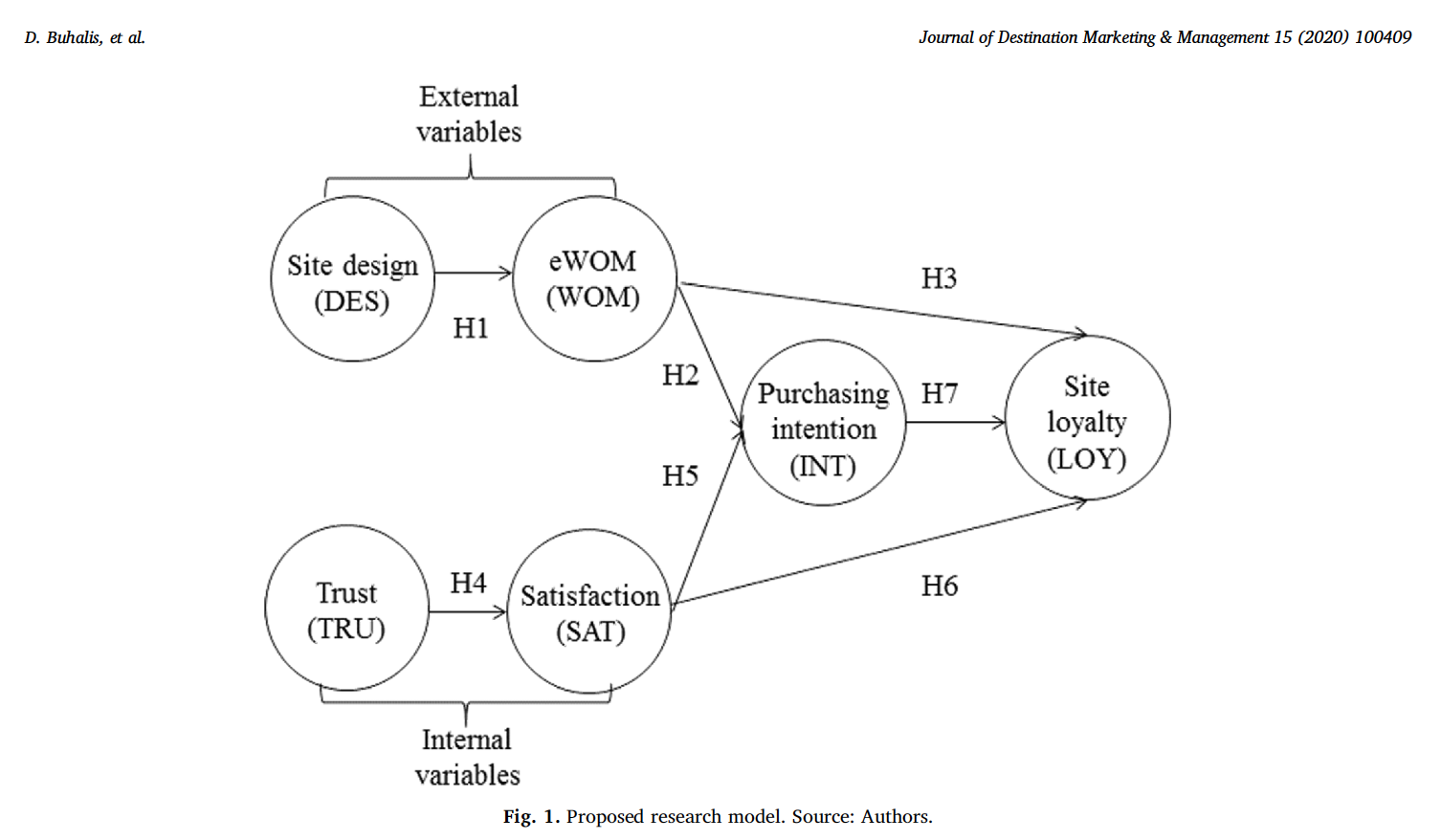
Buhalis, D., Parra López, E., Martinez-Gonzalez, J.A., 2020, Influence of young consumers’ external and internal variables on their eloyalty to tourism sites, Journal of Destination Marketing & Management, Vol. 15, https://doi.org/10.1016/j.jdmm.2020.100409 Download FREE before April 11, 2020 https://authors.elsevier.com/c/1acJm_,51~BCpGT
Highlights
Abstract
This study analyzes, in a generational context, the influence of young consumers’ external and internal variables on their e-loyalty to tourism sites. Using a large sample and employing structural equations (PLS), a new model is generated that includes two external variables (site design and eWOM) and two internal variables (trust and satisfaction), to which the intention to purchase online is added. These variables are very important in e-commerce and tourism, and they have not previously been studied jointly. The results show that the impact of consumers’ internal variables is greater than the impact from external ones. Moreover, the proposed causal model is practical and can be easily applied by tourism companies to improve site e-loyalty in the context of market orientation. The Importance-Performance Analysis (IPMA) carried out shows the importance of satisfaction over other variables.
The Research & Knowledge Exchange Framework (RKEDF) is now into its fourth year. It offers training and development opportunities to academics at all stages of their career, supporting staff to increase their skills, knowledge and capabilities.
The RKEDF offers a range of support including sessions for those who are new to research or to BU, for staff who want to further develop their research careers and for people who want to disseminate their research findings or create an impact plan.
The Research Development & Support team are currently planning activities and sessions for the 2020/21 programme of events and would like to hear your ideas and suggestions. What’s worked well? What would you changed? Are there any other sessions or training materials you’d like to see included? We’d like to hear both from people who have engaged with the RKEDF and those who haven’t.
Tell us what you think via our survey and be in with a chance of winning one of three £20 Amazon vouchers. The deadline date is Sunday 15 March.
NEW ARTICLE PUBLISHED
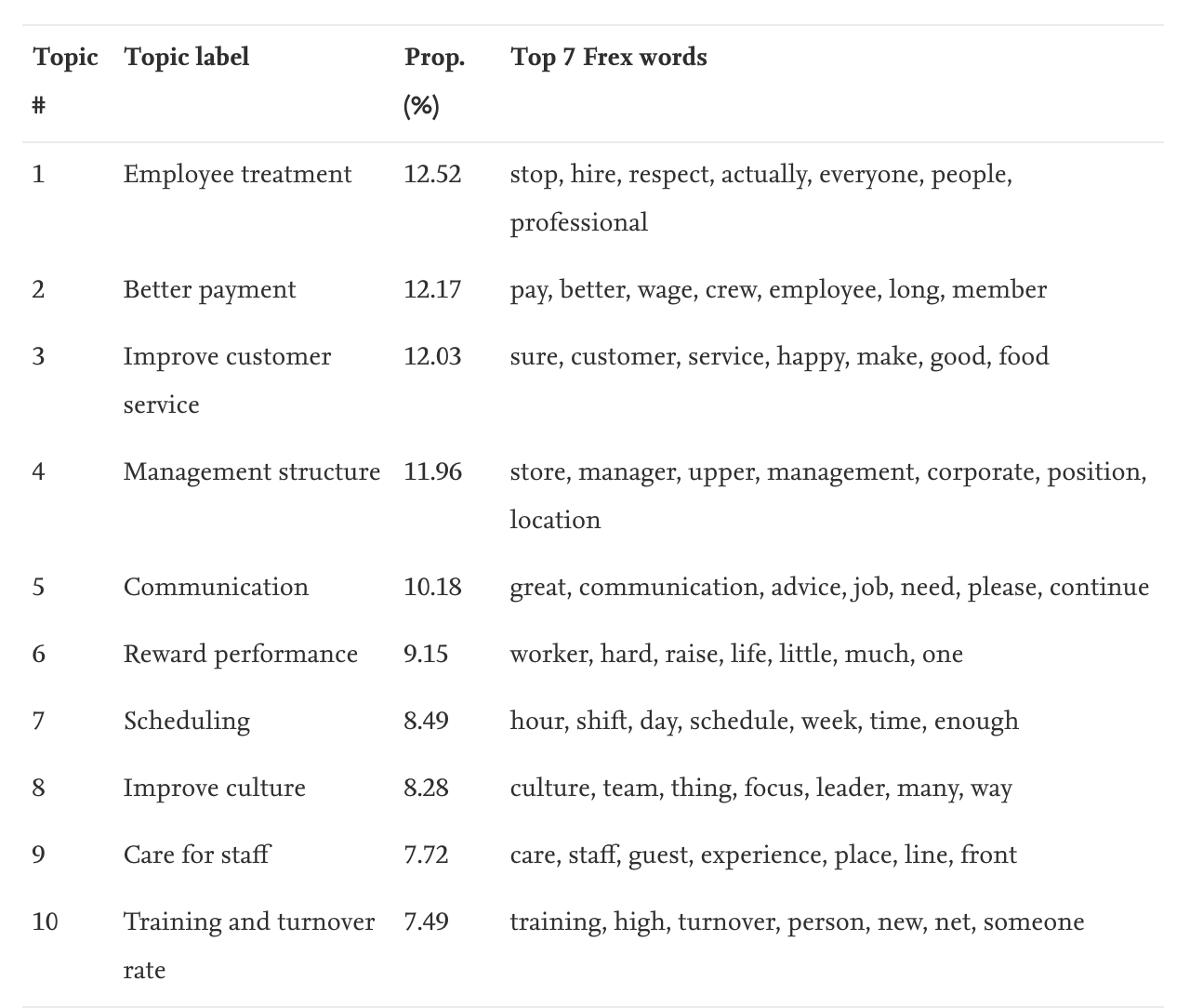
Stamolampros, P., Korfiatis; N., Chalvatzis, K., Buhalis, D., 2020, Harnessing the “Wisdom of Employees” from Online Reviews, Annals of Tourism Research, Vol.80, https://doi.org/10.1016/j.annals.2019.02.012
Download FREE Now https://authors.elsevier.com/c/1aSE6aZ3ER7Ql
The informational value of online employee reviews in tourism and hospitality research and practice. Online reviews can complement existing approaches offering access in a pool of opinion highly representative of the industry. The results of our analysis reveal that the unstructured form of reviews through topic analysis can efficiently capture important topics for employees and is in agreement with previous literature. As such it opens new avenues for researchers and practitioners since the intangible and heterogeneous nature of tourism and hospitality services can be measured with more direct data sources available to the decision makers, than cross-sectional questionnaires.
An interesting insight for managers in these industries is that the adaptation of management practices and improvement initiatives needs to be adjusted vertically (across business units) rather than horizontally (across the organization). The results of the analysis also provide an argument against the “one size fits all” approach (Hom, Lee, Shaw, & Hausknecht, 2017) in the management of service employees across tourism and hospitality industries and as such the incorporation of insights from satisfaction surveys in managerial practices need to be adjusted accordingly.
BRIAN will be unavailable to users next week on Tuesday 28th January and Wednesday 29th January for a scheduled upgrade.
If you need any help using the new system or if you encounter any problems after the upgrade, please do send an email to BRIAN@bournemouth.ac.uk and a member of staff will be able to assist you.
Staff are reminded that the REF Mock Exercise 2020 author outputs nomination on BRIAN will take place between 24 Feb and 8th March. For more information and guidance, please get in touch with ref@bournemouth.ac.uk.
In the meantime, if you do have general queries relating to the upgrade, please get in touch with BRIAN@bournemouth.ac.uk
Further information will be available once BRIAN is up and running again following the scheduled upgrade.
Contribute to two books : Smart Cities and Sharing Economy CALL FOR BOOK CHAPTERS
Published by Goodfellow Publishers
Smart Cities: Co-creating experiences, challenges and opportunities |
Editors: Dimitrios Buhalis, Babak Taheri, and Roya Rahimi https://easychair.org/cfp/SC1
The Sharing Economy: Perspectives, Opportunities and Challenges
Editors: Babak Taheri, Roya Rahimi, and Dimitrios Buhalis https://easychair.org/cfp/SE1
Important dates:
Abstract Deadline: 15th Jan 2020
Chapter Submission Deadline: 12 June 2020
Feedback deadlines: 8 August 2020
Submitting revised chapters: 30 October 2020
Review by editors: October to December 2020
Submitting final chapters: 18 December 2020
Submitting to Publisher: 12 February 2021
Action required – Guidelines for proposal submissions:
_____________________________________________________________________Smart Cities: Co-creating experiences, challenges and opportunities
Editors: Dimitrios Buhalis, Babak Taheri, and Roya Rahimi
https://easychair.org/cfp/SC1
This book will provide a new insight for the current issues and opportunities on smart cities and related concepts in the next generation of urban evolution. It will provide a better understanding of city services but also the enhancement and evaluation of locals’ (and visitors) experience and city decision making processes by creating liveable environments and business solutions. The book will serve as a main reference point for smart cities researchers, scholars, students and practitioners state-of-art knowledge depository on marketing management (and related areas e.g., urban studies) from a new modern perspective within the smart cities.
PROVISIONAL AND INDICATIVE LIST OF CHAPTERS (SUGGESTIONS WELCOME!)
Ch 1. Introduction to Smart Cities: Co-creating experiences, challenges and opportunities
Ch 2. Co-creating smart experiences (defining co-creation of value and related concepts in contemporary age)
Ch 3. Current challenges for smart cities, tourism and urbanisation (challenges in cities which leads to need to smart cities opportunities)
Ch 4. Value co-creation in smart cities (defining smart cities and related concepts)
Ch 5. Digital transformation (in relation to smart cities and digital world)
Ch 6. Smart sustainable environment and cities (CSR and sustainability)
Ch 7. Smart people (Human capital: issues and opportunities in smart cities)
Ch 8. Smart economy (Investment: issues and opportunities in smart cities)
Ch 9. Smart mobility (Transportation: issues and opportunities in smart cities)
Ch 10. Smart living (Community engagement: issues and opportunities in smart cities)
Ch 11. Smart governance (Politics and government engagement)
Ch 12. Smart Business models, co-creation of experiences and smart cities
Ch 13. Smart trends in the tourism and hospitality industry
Ch 14. The Smart future: stakeholders, catalysts, opportunities and challenges
Ch 15. Case studies (this chapter will have a case study for each of 14 chapters)
_____________________________________________________________________The Sharing Economy: Perspectives, Opportunities and Challenges
Editors: Prof. Babak Taheri, Dr. Roya Rahimi, and Prof. Dimitrios Buhalis
https://easychair.org/conferences/?conf=se1
This book will focus on the sharing economy from a marketing and managerial perspective and will explore implications area of tourism marketing and management, services marketing and urban studies. It will encourage new theoretical and empirical development on sharing economy studies in the service industries field and offers a new insight to indicate potential research opportunities and areas of interest different aspects of sharing economy. Target readership will be higher level undergraduate (UG) and postgraduate (PG).
PROVISIONAL AND INDICATIVE LIST OF CHAPTERS (SUGGESTIONS WELCOME!)
Ch 1. Introduction The Sharing Economy: Perspectives, Opportunities and Challenges
Ch 2. Exploration of service platforms and marketplaces (defining platform services, adventuristic start-ups)
Ch 3. Sharing economy (defining sharing economy and related concepts)
Ch 4. Application of co-creation of value: Two-sided markets (locals vs. visitors)
Ch 5. Gig economies (defining gig economy and related concepts)
Ch 6. National culture and sharing economy (matchmaking, and studies within other culture/context)
Ch 7. Overarching theories on sharing economy (e.g., social exchange theory, complexity theory, norm activation model, etc)
Ch 8. Models of platform-based sharing economy businesses (defining customer lifetime value (e.g., business to customer model; P2P: peer to peer model, etc.); plus for-fee models (e.g., Uber, Airbnb) or no-fee models (e.g., TripAdvisor, Instagram, Wikipedia)
Ch 9. Big data and digital marketing (the importance of digital marketing within the sharing economy)
Ch 10. Operations management in sharing economy (operations and process in sharing economy)
Ch 11. The law of sharing economy (regulations, licensing, roles of state governments etc)
Ch 12. Ethics and sustainability in sharing economy (CSR and sustainability issues)
Ch 13. Future of sharing economy
Ch 14. Case studies (this chapter will have a case study for each of 13 chapters)