Produced by Guest Blogger
Guest blog by Thomas Sutherland, BA (Hons) Film
Choosing your university path is rarely straightforward, but moving between two completely different academic worlds introduces a very specific kind of stress. Throughout college, my focus was entirely on STEM subjects (I studied maths, physics and engineering). I was used to the logic of equations and being either right or wrong, so deciding to study Film at university felt like a massive leap into the unknown. While I had the usual worries that every new student faces like getting lost on campus or making friends, my biggest worries came from this drastic academic change. I wasn’t just moving onto my next level of learning, I was completely changing how I was expected to think.
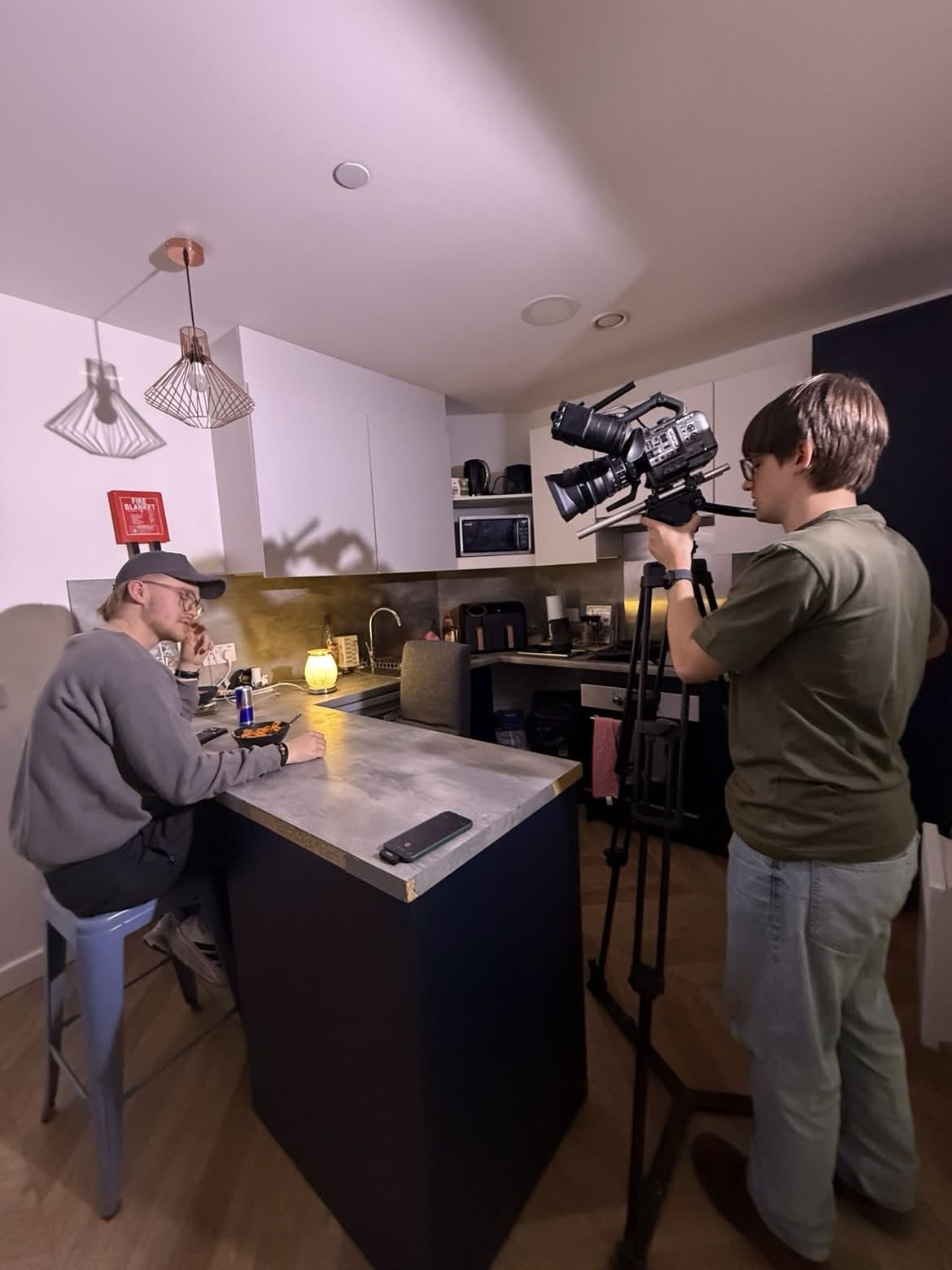 The thing that made me nervous the most was the sudden lack of a safety net. In STEM, you are graded on being right or wrong. There is a strange comfort in knowing a problem has a definitive answer, whereas Film is completely subjective. Moving from a structured environment into a creative space driven by personal interpretation was very intimidating. The thought of being vulnerable and having my work openly criticised by peers and lecturers was terrifying to someone used to
objectivity and had no experience in the field.
I also struggled with imposter syndrome during my first few weeks. I kept convincing myself that
everyone else on the course would arrive with huge portfolios and niche cinema knowledge. Coming from an analytical background, I worried that I lacked the creative experience needed to even participate in class discussions, let alone excel in them. This academic insecurity made the social aspect of starting university much harder. It felt like everyone else was already a filmmaker and I was scared that my lack of a media background would make me fall behind.
However, as the practical work actually began, that initial anxiety started to lift. I quickly realized that the university wouldn’t let me get left behind. All teaching started from the ground up and the lecturers ensured that everyone understood the core information. Similarly, some of my STEM background actually became incredibly useful when preparing to film, where you have to fill out risk assessments, coordinate equipment logistics, and troubleshoot technical lighting or camera errors under time pressure, which are all skills honed in STEM. Film requires a lot more analytical thinking than I had realized, and my previous studies had prepared me for that perfectly.
Looking back now in my final year, the nerves I felt weren’t a sign that I had made the wrong choice, but a natural reaction to pushing myself out of my comfort zone. Stepping away from the predictability of science was intimidating, but bridging the gap between STEM and the Film industry has ultimately given me a unique perspective. Embracing that initial fear allowed me to see that you don’t have to leave your past skills behind to pursue something new, you can instead use them to
bring a fresh view to your creative work.
 5 ways to celebrate the festive season on a student budget
 Our top pizza places in Bournemouth
 Reflecting on my first year: what would I do differently?
 Packing my bag for uni