Lectures delivered by prof. Fisher are all available online from the CopyrightX website. Seminars are held on Tuesdays, 16:00 to 18:00, in Room EB204 at the Executive Business Centre, Bournemouth University Week 1 Lecture 1 (online): The Foundations of Copyright Law Seminar (26 January): Originality and Idea/Expression distinction 17 U.S.C. 102(a), 17 U.S.C. 102(b) Bleistein… Read more » about CopyrightX: CIPPM – Syllabus 2016
Uncategorized
CopyrightX course 2016: admission is now open

CopyrightX Affiliate course is a twelve-week networked course, offered by CIPPM under the auspices of Harvard Law School, the HarvardX distance-learning initiative, and the Berkman Center for Internet and Society. The course explores the current law of copyright and the ongoing debates concerning how that law should be reformed. Through a combination of pre-recorded lectures,… Read more » about CopyrightX course 2016: admission is now open
Short-term residential fellowships 2016

CIPPM invites applications for short-term residential fellowships, to carry out independent research and study at Bournemouth University. Fellowships are open to both early-career as well as experienced researchers with a specific interest in any of the focus areas of the Centre.(*) The selected applicants will be expected to engage with CIPPM faculty and students, taking… Read more » about Short-term residential fellowships 2016
Spring Public Lectures 2016
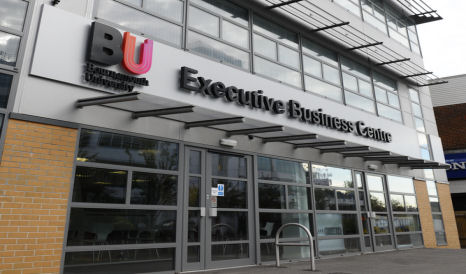
Our public lectures series on topical issues of intellectual property law and policy is open to anyone to attend, but space is limited. Please email Mandy Lenihan to reserve a place on one or all of the lectures. The events will take place at the Executive Business Centre, close to Bournemouth train station. Download the… Read more » about Spring Public Lectures 2016
P. Reeves and D. Mendis – The Current Status and Impact of 3D Printing Within the Industrial Sector: An Analysis of Six Case Studies
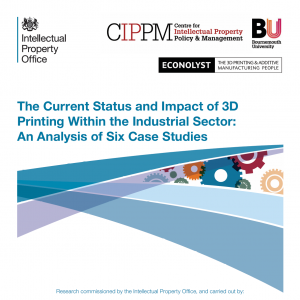
P. Reeves and D. Mendis, The Current Status and Impact of 3D Printing Within the Industrial Sector: An Analysis of Six Case Studies (London: Intellectual Property Office; 2015) Download Report here (86 pages). This is the second of a two-party study (and an executive summary) commissioned and funded by out for the UK Intellectual Property… Read more » about P. Reeves and D. Mendis – The Current Status and Impact of 3D Printing Within the Industrial Sector: An Analysis of Six Case Studies
News
 Leading experts from academia and industry headline PGCert IP opening residential weekend February 9, 2026
 CIPPM at the BFI: Archiving and Copyright Challenges February 4, 2026
 Reflecting on the Leverhulme Visiting Professorship on Intellectual Property & International Business January 14, 2026