Wednesday 5th June 2013
One of the focuses of this year’s excavation has been on the Banjo Enclosure ditch that runs partially through and underneath the Roman “villa”. The main purpose of this has been to see the sections between the Roman period material and when the Banjo Enclosure was in use. Excavation of this area today by Charlotte Boyd and Nida Chu recovered a type of sickle, pictured below.

Iron sickle recovered by Charlotte Boyd and Nida Chu, courtesy of Bournemouth University.
The sickle was originally interpreted as a billhook, which is another type of hand tool used for agriculture and forestry. However closer analysis of the find’s shape indicated there not enough hook for it to be the case. The sickle still contains a proportion of the shaft, that would have been used to insert a handle, possibly made out of wood.
Elsewhere on site, two very different shards of glass have been recovered. The first was recovered by Dominique Hopton and Afifa Khan from one of the larger house platforms. As pictured below, it consists of clear glass with a yellow patterning across and is considered high status Roman glass.
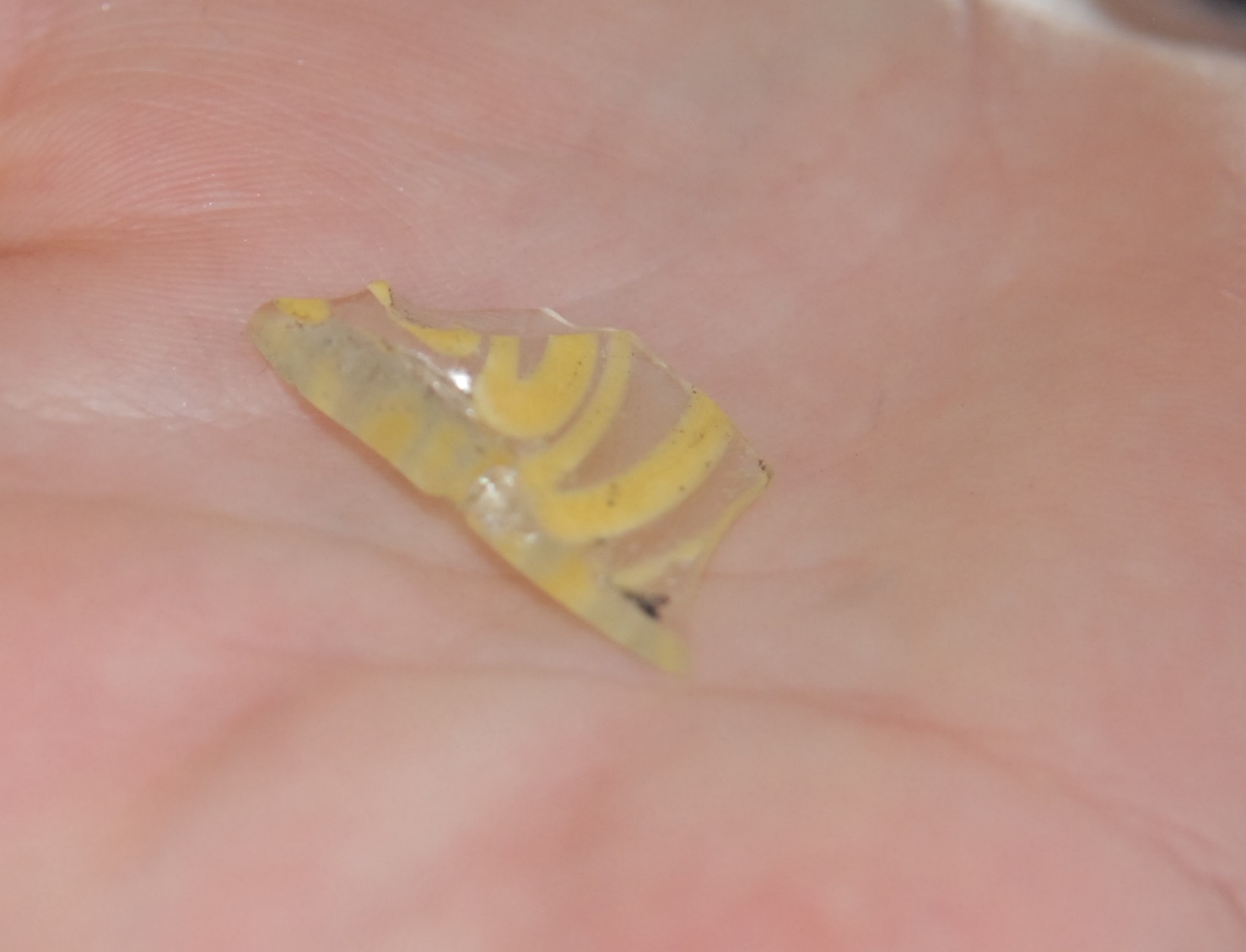
Yellow patterned clear glass recovered by Dominique Hopton and Afifa Khan, courtesy of Bournemouth University.
The second glass fragment recovered was from another possible house platform further down the site by Jane Randall. As pictured below, it is green coloured, patterned and appears to be part of a decorative handle of a glass vessel.
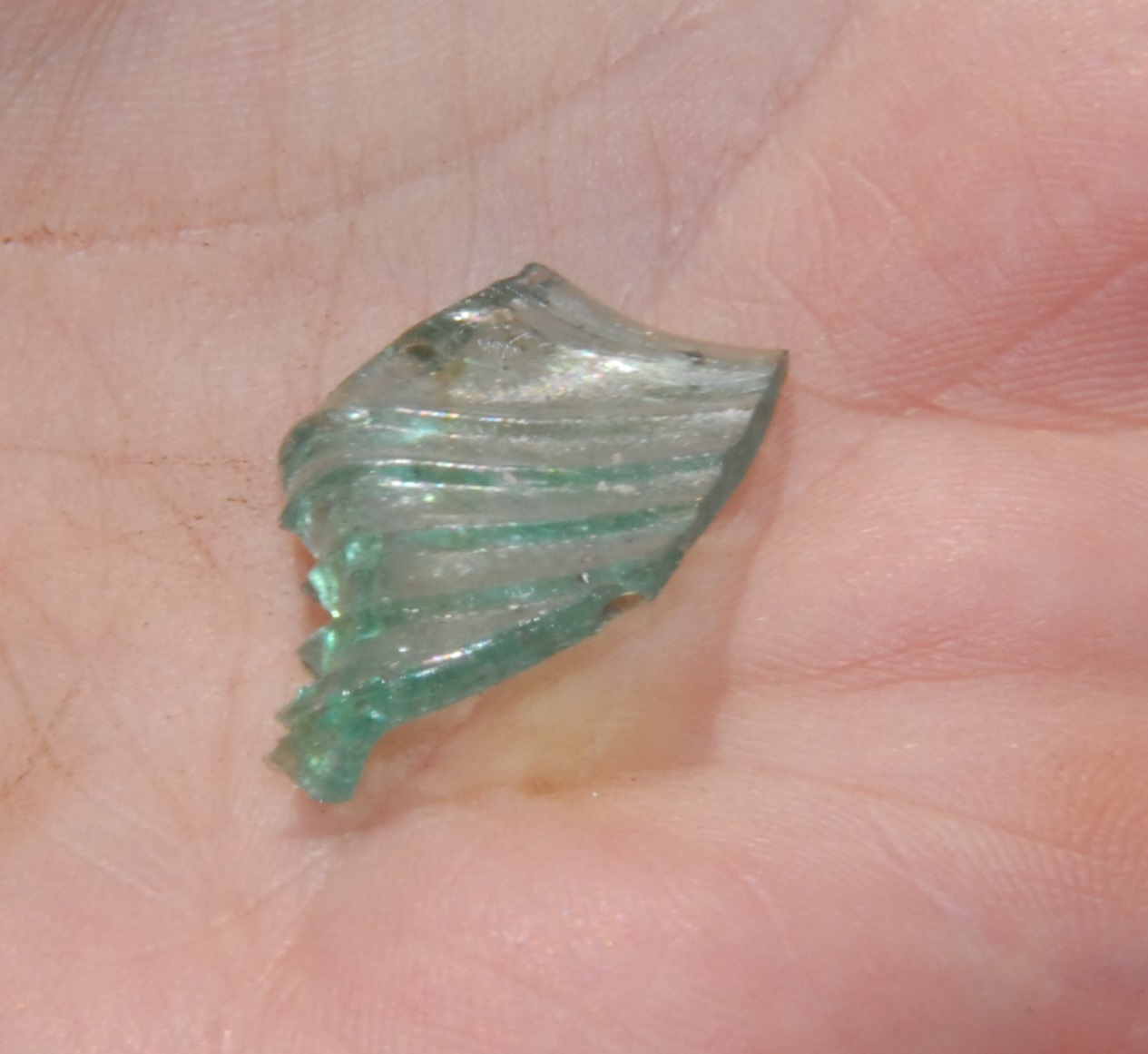
Green patterned glass recovered by student Jane Randall, courtesy of Bournemouth University.