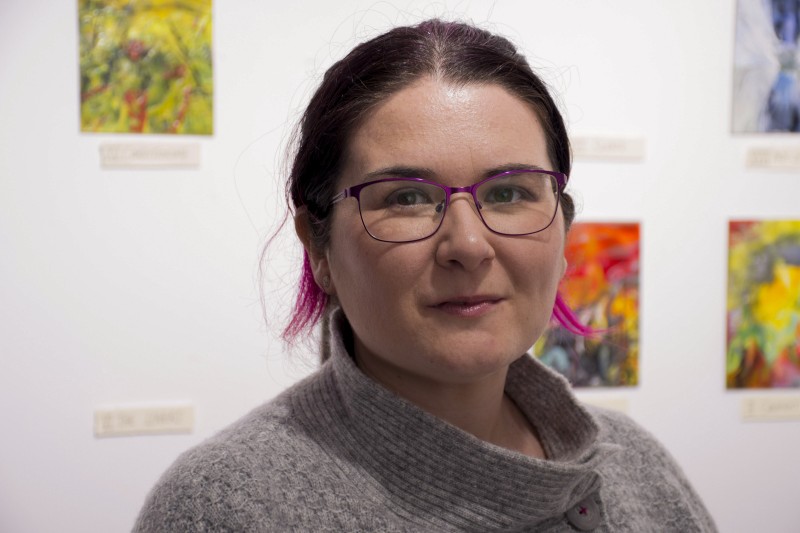
MA Multimedia Journalism student James Brooks speaking to Rachel Rogers, Labour candidate for Dorset’s Police and Crime Commissioner election
By James Brooks
It’s Monday morning, I have five articles to write, a TV package to shoot and a radio interview to record and – if I get all that done – I might be able to start writing one of my essays.
A week in the life an MA Multimedia Journalism student at Bournemouth University is an enjoyable one, if a busy one. The one-year conversion course provides a whistle-stop tour of everything a budding young broadcast journalist needs to know to make it in the cut-throat world of modern journalism.
The practical nature of the course means we’re constantly given opportunities to gain first-hand experience across a variety of media.
Our week begins with a ‘free day’ on Monday, which means I’m in at 9am working on our forthcoming edition of The Breaker.
Students across all three MA Journalism courses are required to collaborate on the weekly web-magazine which allows us to take up editorial and writer roles, working together to produce a varied and exciting piece of online journalism.
The multimedia aspect of the site allows us to explore whichever area we’re most interested in. As radio is my chosen area, I enjoy contributing audio vox-pops and interviews and producing a weekly podcast in which we talk about what readers have to look forward to in the forthcoming edition.
The practical sessions, which provide the emphasis of the course, are taught across three two-hour sessions on Tuesdays and Wednesdays.
Taught by tutors with industry experience, the sessions give us expert training in the use of equipment and computer programmes instrumental in radio, television and online journalism.
Programme coordinator, Sue Wallace, who teaches our radio classes, trains us in interview techniques so that we can all question like John Humphreys, while Guy Montrose, one of our television tutors, trains us in video production so that our reports can be as beautiful as they are informative.
The most enjoyable element of these sessions is the focus on the practical work; students will often be seen racing around radio studios, speedily producing a news bulletin or wandering across campus, armed with a camera, on a mission to shoot a video package.
However, these practical sessions are often balanced with more academic classes such as our Frontiers in Journalism module taught by former journalist – and now researcher – Phil MacGregor.
Phil’s classes on Tuesday afternoons often focus on interesting elements of modern journalism such as the regulation of the press or the emerging importance of citizen journalism.
The classes, which often include a lively discussion element, ensure that once we graduate we’ll be clued up on the state of modern journalism and the issues affecting it today.
This is supported by the university’s weekly journalism research group on Wednesday evenings, featuring guest speakers or a screening of a journalism-related film; the addition of popcorn is optional.
Of course, none of our practical training would be useful unless we can actually write like a journalist. The ability to turn a phrase or pop a pun still remains important despite the multimedia nature of journalism today.
Thursdays are writing days for us students as we attend a four-hour reporting skills class in which we work on our writing styles and article structuring.
Recent classes have included a trip to Bournemouth Magistrates Court to see what is required to be a court reporter, while the weekly task of finding news articles gives us a taste of proper ‘shoe leather’ journalism as we must often head out into the world to find our own news stories.
Our last class of the week is Friday morning’s Law and Ethics, taught by journalist and media law expert, David Mascord.
Our fixed two-hour a week sentence ensures that we are aware of the laws surrounding our journalistic work so that once we begin our careers in the media we don’t find ourselves in jail, or even worse, out of a job!
David also kindly manages to liven up the 9am Friday morning session by selecting the most entertaining and sordid cases from the media’s glittering past-dealings with the law.
As a former-journalist David ensures we know our rights as members of the media as well as the rules that we must abide by.
So ends our week on the MA Multimedia Journalism course, but the work really doesn’t stop there.
On this course the onus is truly on the students in terms of the work we produce and the opportunities that we take.
Now excuse me, I have some articles to write…